Our Founder, Graham Parkes, died early in 2023; obviously his loss is keenly felt, but he leaves a rich and unparalleled legacy for the future.
We hope Waterside Heritage remains in good hands, and that our continuing work will do justice to his vision and devotion to preserving the past. This site is dedicated to his memory. A selection of obituaries is available online, including:
We're very sad to announce that our Vice-Chairman, Gordon Chambers died on 10th August 2026 after a long illness, stoically endured.
Gordon was a local lad and a keen supporter of The Saints. He was born and brought up in Dibden Purlieu, attended Dibden Primary School and then Noadswood Secondary School. After leaving school he joined Hovercraft and worked there from 1964 to 1990. He then worked for British Gas and Cromwell Tools.
After retiring, he was a tireless Vice-Chairman of Waterside Heritage. His major work for the last three years was completing the book on the history of Dibden Purlieu started by our late Founder and Chairman, Graham Parkes. He was enthusiastic about the work and wanted an index, more pictures and fewer words than our previous two publications. He had reached the stage of selecting photographs to include when he went into hospital.
In addition, Gordon was Chairman of Hythe Historians which met every month in the Hythe and Dibden Community Centre. To both these roles he brought immense local knowledge and common sense enlivened with a puckish sense of humour. He was also in demand as a speaker on various aspects of local history. We at Waterside Heritage will miss him and our condolences, sympathy and best wishes go to his long term partner, Shirley.
This leaves Waterside Heritage with a number of new challenges. First we need a new Vice-Chairman. Any volunteers would be welcome. Then, we need to complete the work on the book as part of his, and Graham’s, legacy – it was expected later this year but will now probably appear next year.
A very subjective list of historical dates important to Hythe and the Waterside.
971: A church is first recorded at Fawley.
1086: Fawley listed in the Domesday book, as part of lands held by the Bishop of Winchester.
1170 - 1340: The present Fawley church constructed and extended.
1293: Hythe first mentioned in a Parliamentary Roll.
1539: Henry VIII ordered the construction of Calshot Castle, to defend Southampton from invaders.
1575: "Hithefery" marked on a map produced by Christopher Saxton.
1780: Luttrell's Tower built at the Eaglehurst estate at Calshot, for Temple Simon Luttrell.
1837 - December 23rd: The Hampshire Advertiser reports the death of John Richards of Hythe, noting that 'the father of the deceased founded the neat little village of Hythe: previous to his time there was no building there of greater pretensions than the huts of a few fishermen. The elder Mr Richards, when he established a shipbuilding yard at Heath (as it was then called) built houses for his workmen and the village soon sprang up.'
1874: The Church of Saint John the Baptist erected, replaced a previous church built in 1824.
1881 - January 1st: Hythe Pier was opened, having taken two years to construct, at a cost of £7,000.
1909: A narrow-gauge railway was installed on the northern side of Hythe pier.
1912: Guglielmo Marconi used Luttrell's Tower to conduct wireless experiments.
1913: Hythe joined the parish of Dibden, having previously been part of the civil parish of Fawley.
1913: The Royal Flying Corps established Calshot Naval Air Station (later RNAS Calshot and RAF Calshot).
1921: Oil refinery at Fawley first developed by the Atlantic Gulf & West Indies Petroleum Company (AGWI).
1922: The electrified railway, which is still in place, was installed, on the southern side of the pier.
1922 - November 25th: Hythe & Dibden Memorial Hospital was opened and dedicated, in memory of those from Dibden parish who gave their lives in the Great War. A second dedication was later added to commemorate the lives lost in World War 2.
1923: British Mexican Petroleum bought out the AGWI refinery.
1925: The Anglo-American Oil Co., the British affiliate of Esso, acquired the refinery.
1927 - September 30th: British Power Boat Company formed, by Hubert Scott-Paine, on the site of the old Hythe Shipyard.
1931 - 32: T. E. Lawrence lodged in Hythe (at Myrtle Cottage) and worked with Scott-Paine on the design and operation of RAF200, a 37-ft seaplane tender.
1948: Hythe & Dibden Cricket Club formed (by amalgamating the separate Hythe and Dibden Purlieu clubs).
1951 - September 14th: The extended Esso oil refinery at Fawley was officially opened, by the Prime Minister, Clement Attlee.
1961: Population of Tristan da Cunha evacuated due to volcanic eruption, and residents were housed at Calshot.
1965 - 1969: Fawley power station constructed.
1968: The US Army took over RAF Hythe.
1970: Calshot Lifeboat Station established.
1971: Fawley power station commissioned.
1999 - June 1st: Sir Christopher Cockerell, Hythe resident, and inventor of the hovercraft, died in Hythe.
2006: US Army vacated the RAF Hythe site, which was bought by the South East England Development Agency and turned into Hythe Marine Park.
2013 - March 31st: Fawley power station officially closed.
Membership of Waterside Heritage costs: Annual membership (renewable January each year): £12.00 Life membership: £120.00
To join, please download the PDF membership form, print and complete it, and return it to us:
Membership Secretary Waterside Heritage Centre Dominy Close Hythe Hampshire SO45 6HA
Payment can be in cash, cheque (payable to Waterside Heritage), or preferably by BACS payment - details on the membership form.
If you are a UK taxpayer, please consider completing the Gift Aid declaration attached to the form, which will help us to reclaim 25% of the subscription from HMRC.
Do you have old photos, letters, films, or anything else, that you might like to donate? We are always interested in anything connected to the history of the Waterside. However, do bear in mind that:
We may not need duplicates of things we have already; particularly easily-available items such as Ordnance Survey maps.
Unfortunately we can't accept, or give advice on, items that aren't connected to the Waterside.
It's really helpful if documents, etc. have a background story or provenance, so that we can record as many details and local connections as we can.
Ditto, photographs, if there is some supporting information on the people, places or events featured.
If you have anything you think might be interesting to us, please contact Mike Gibson - This email address is being protected from spambots. You need JavaScript enabled to view it.
Would you like to become a member? We offer annual or life memberships - please see the Join Us page.
Would you like to volunteer to help us at the Centre? We have a huge collection of information to be archived and preserved, and volunteer helpers are always welcome, to assist with scanning, preserving, cataloguing and displaying our collection. Having more volunteers would also enable us to open the Centre to the public more frequently, to increase the value of our work to the community. If you have a few hours to spare occasionally, please contact us.
Do you have any spare IT equipment you no longer use? We particularly need a good quality photo / slide scanner; if you're able to help, please contact Mike Gibson - This email address is being protected from spambots. You need JavaScript enabled to view it.

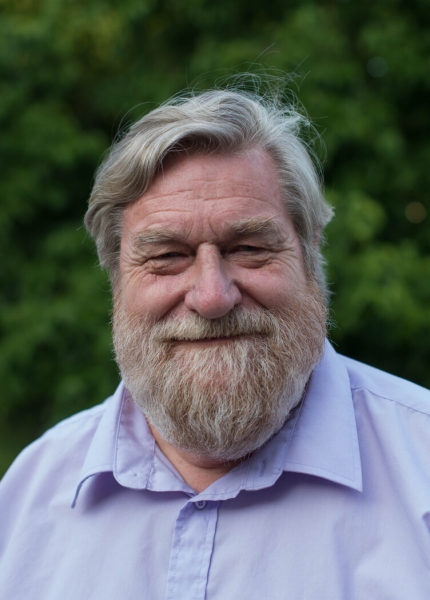 Our Founder, Graham Parkes, died early in 2023; obviously his loss is keenly felt, but he leaves a rich and unparalleled legacy for the future.
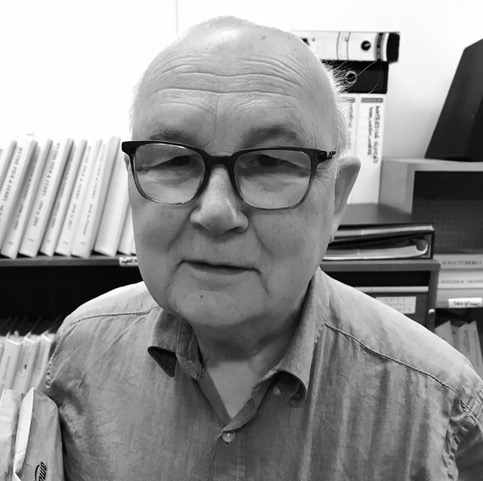 We're very sad to announce that our Vice-Chairman, Gordon Chambers died on 10th August 2026 after a long illness, stoically endured.